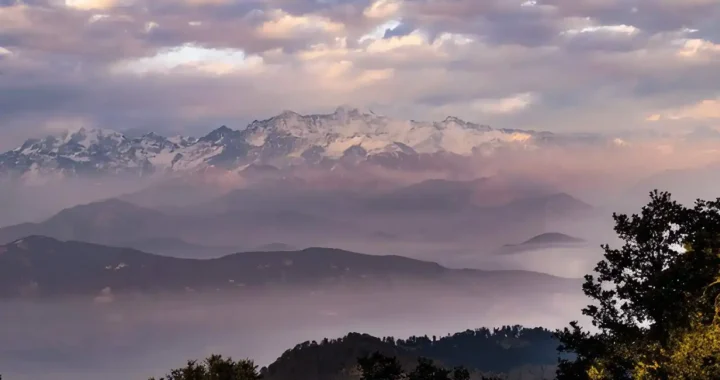
Yulla Kanda is one of the offbeat treks in Kinnaur, Himachal Pradesh, that takes you to the sacred Krishna Temple. This temple is known as the highest Krishna temple, which holds deep religious significance. Local traditions often associate it with the Pandavas, and Janmashtami is celebrated here with devotion.
There is a long uphill walk that passes through a remote mountain village, forests, apple orchards, open meadows, and steep sections before reaching the sacred Yulla Kanda Lake and Temple.
This Yulla Kanda Trek guide covers the route, distance, difficulty, best time to visit, itinerary, accommodation, what to carry, and important things to know before starting the trek.
Where Is Yulla Kanda?
Yulla Kanda is located in the Nichar area of Kinnaur district, in the Rora Valley of Himachal Pradesh. The Krishna temple is situated at an altitude of 12,780 ft and is reached by a trek of around 12-13 km one way from Yulla Khas or Yulla Village.
To reach the trek starting point, you drive through Tapri and Urni towards Yulla Khas. The road becomes narrow as you get closer to the village, and walking is required for the final section.
Yulla is a small and quiet mountain village, not a crowded tourist destination. The village has traditional houses, apple orchards, and views of the surrounding mountains, making the journey to Yulla Kanda part of the experience.
How Long Does the Yulla Kanda Trek Take?
The Yulla Kanda trek is around 12-13 km one way and can take around 7-8 hours, depending on your starting point, pace, weather, and trail conditions.
- Yulla Village to Base Camp: Around 10 km
- Base Camp to Yulla Kanda Temple: Around 2-3 km
- Total Distance: Around 12-13 km one way
- Round trip: Around 24-26 km
The final 2-3 km could be longer than expected because the trail becomes steeper, rockier, and more slippery, especially after rain or during snow.
Start early around 5-6 AM if you are staying in Yulla and want to complete the trek in a single day.
How to Reach Yulla Khas/Yulla Village?
If you are coming from Delhi or Chandigarh, first reach Shimla and then continue towards Kinnaur on NH-5 route. From Shimla, the road passes through Narkanda, Rampur, and Tapri before you turn towards Yulla Khas.
From Shimla to Yulla Kanda
From Shimla, drive towards the Kinnaur region to reach Yulla by road. The journey is 210 km long that takes around 6-7 hours, so it is better to keep enough time for travel rather than trying to reach the trek starting point in a hurry.
The road journey passes through the mountain landscape of Himachal Pradesh before reaching the Yulla area.
From Chandigarh to Yulla Kanda
If you are travelling from Chandigarh, you first need to make your way towards Shimla and then continue towards Kinnaur.
Since the journey is 323 km long and involves considerable mountain driving (around 9-10 hours), start early and keep some flexibility in your schedule.
Delhi to Yulla Village
The road journey from Delhi to Yulla village is 553 km long, which takes around 13-14 hours. The route follows is Delhi- Panipat-Ambala- Shimla-Yulla. From Yulla Village, the trek continues on foot.
- By Air: The nearest airport is Shimla Airport (Jubbarhatti). After landing, take a taxi to Tapri or Yulla Village, which is around 232 km away. There is no airport-to-Yulla direct connection.
- By Road: If you are coming from Chandigarh or Delhi, take a bus to Shimla and then continue towards Kinnaur by HRTC bus, jeep, or taxi. From the bus, get down at Tapri and take a taxi or cab towards Yulla Khas.
- By Train: The nearest major railway station is Kalka Railway Station. From there, take a bus or taxi to Shimla. From Shimla, continue towards Tapri by HRTC bus, jeep or taxi. Get down at Tapri and look for local taxi towards Yulla Khas/Yulla Village.
Consider hiring a local driver, as the roads become narrower and more mountainous as you enter the Kinnaur Valley.
Yulla Kanda Trek: Route to Krishna Temple
Yulla Village
Yulla Khas is the main starting point for the trek. The trek begins through the village, with stairs, an initial uphill climb, and the river flowing below. The route passes through the traditional Kinnauri houses and village paths. The surroundings become quieter as you leave the village area behind.
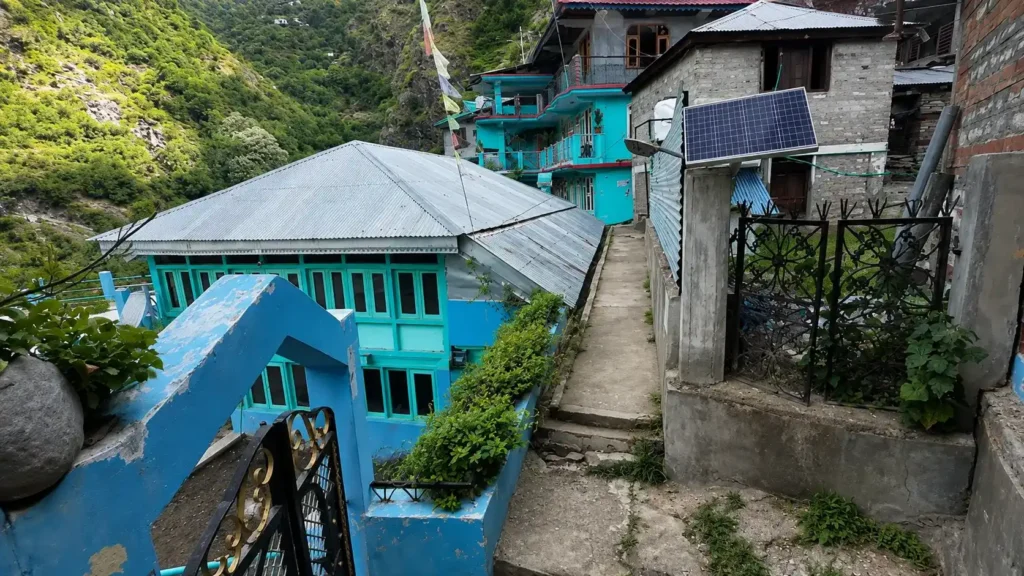
This part is around 1-1.5 km and can feel manageable compared with what comes later, but it is still a good idea to start slowly because there is a long climb ahead.
Before leaving, fill your bottle and make sure you have everything you need. You won’t find many facilities once you start the trek.
After Crossing Village Section
Small water sources can be found along the route. Waterfalls and flowing streams are seen during the walk. In colder conditions, some of these streams can be partially or completely frozen.
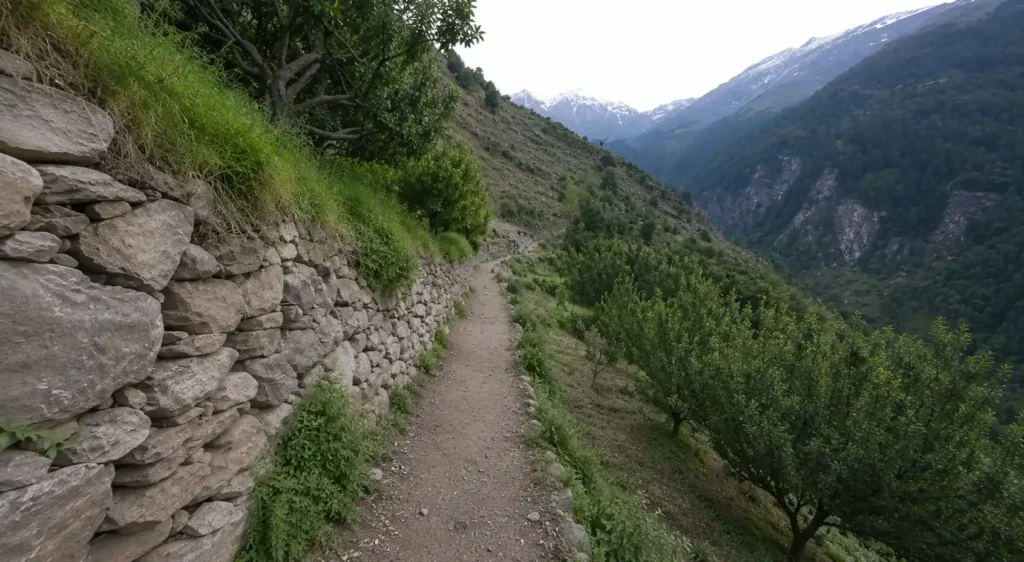
Forest Section
Further along, the trail enters the forest. The path is narrow, with mountains around, and includes uneven surfaces and muddy sections without any safety railing. There are sections where you need to be cautious, as they are marked as accident-prone areas from which rocks can fall. You will pass through a stream of water. You can refill your water from there. This is one of the longer sections (7-8 km) of the trek, which feels more remote.
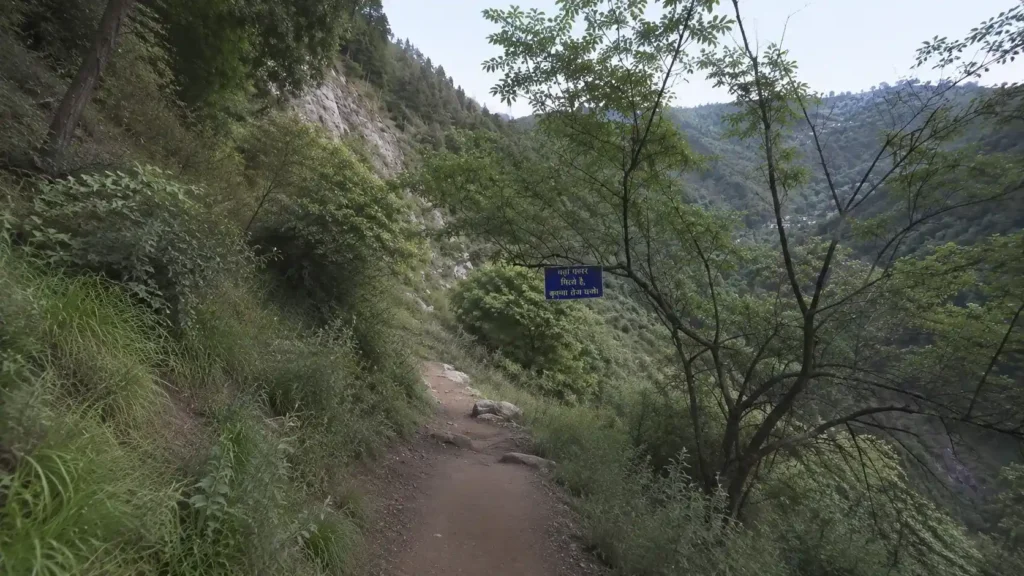
There are junctions where you need to pay attention, as there is more than one path at some places, which may confuse you. This is why a local guide can help, especially for first-time visitors when weather conditions are not good and trails are snow-covered.
Mobile network is also weak or unavailable in parts of the route, so do not depend entirely on your phone for navigation or communication.
Base Camp
After the forest, you reach the base camp, which the important stopping point on the route. This area is around 3-4 km before the temple.
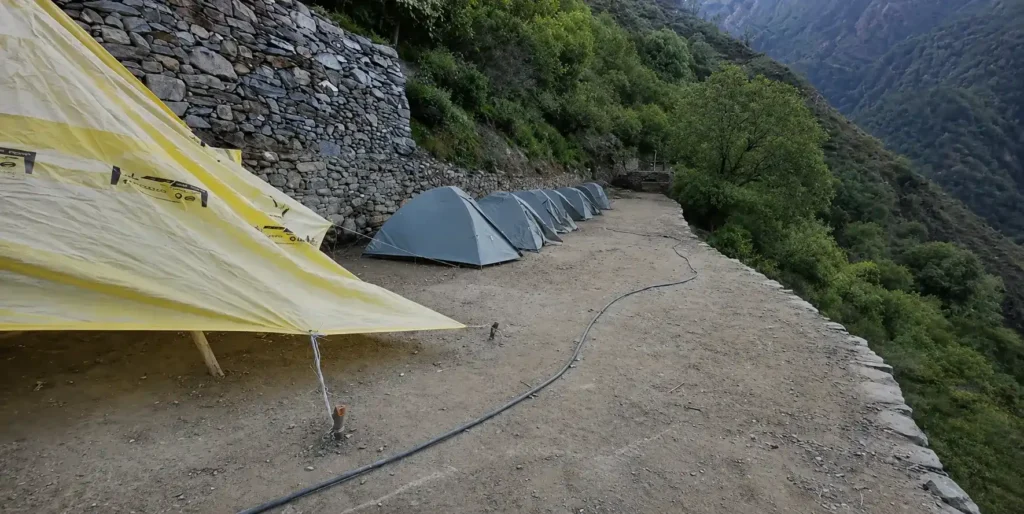
You can stay here overnight and continue the final section the next morning, or take a break to have some basic meals like tea, coffee, etc.
Final Stretch to Yulla Kanda
Cross the gate on the route which takes you towards the temple (2-3 km). A sign on the gate also asks visitors not to pluck flowers or plants. Don’t touch the plants or litter, and keep the area clean.
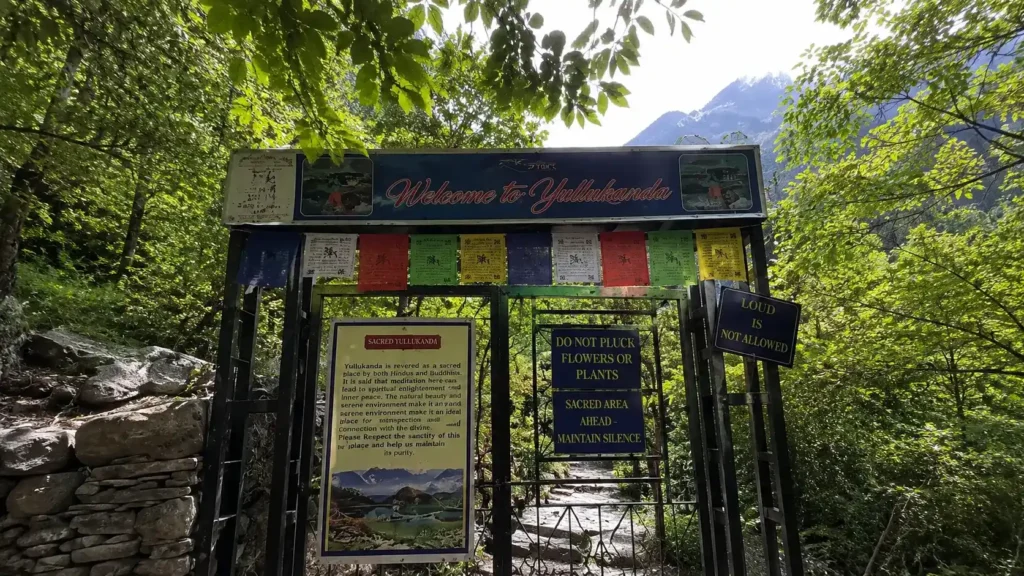
After this point, the trail can become steeper, muddier, and more slippery, especially after rain, which can make the last few kilometres more tiring.
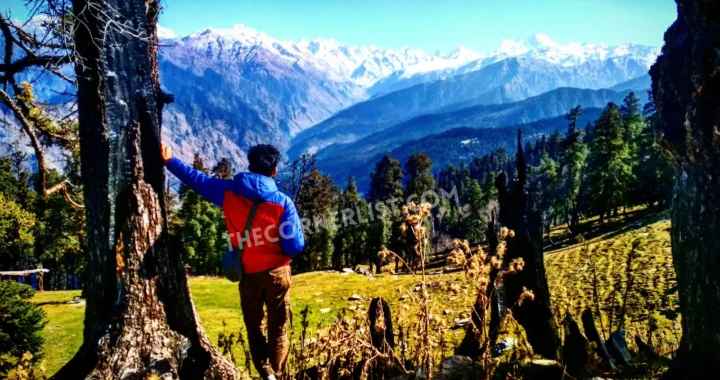
In this section, the landscape changes quite noticeably. The trail leads to the large meadows or bugyals, with open mountain views. During winter, snow can cover parts of this section, making the trail much harder.
There are water streams, small waterfalls, large rocks, and grazing animals such as cows in the open areas.
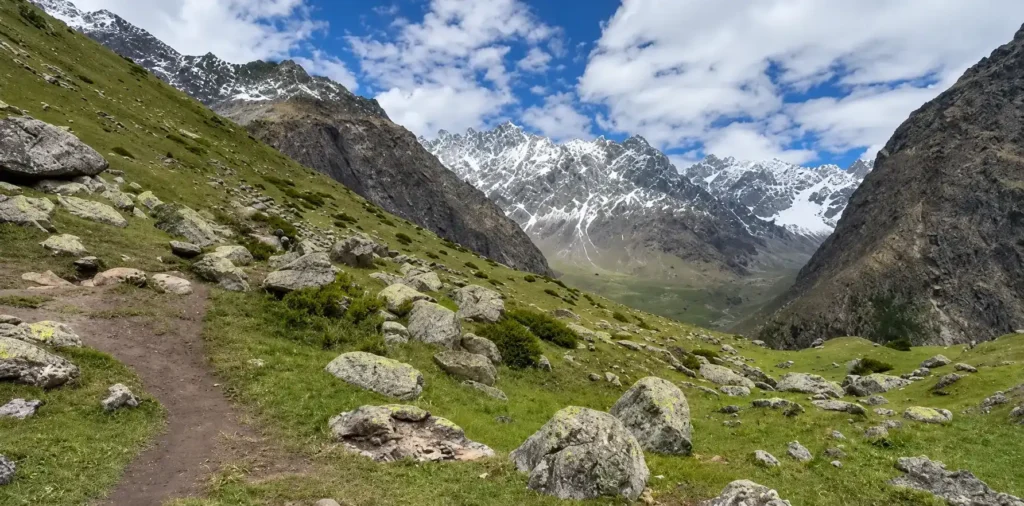
Reaching Yulla Kanda Temple and Lake
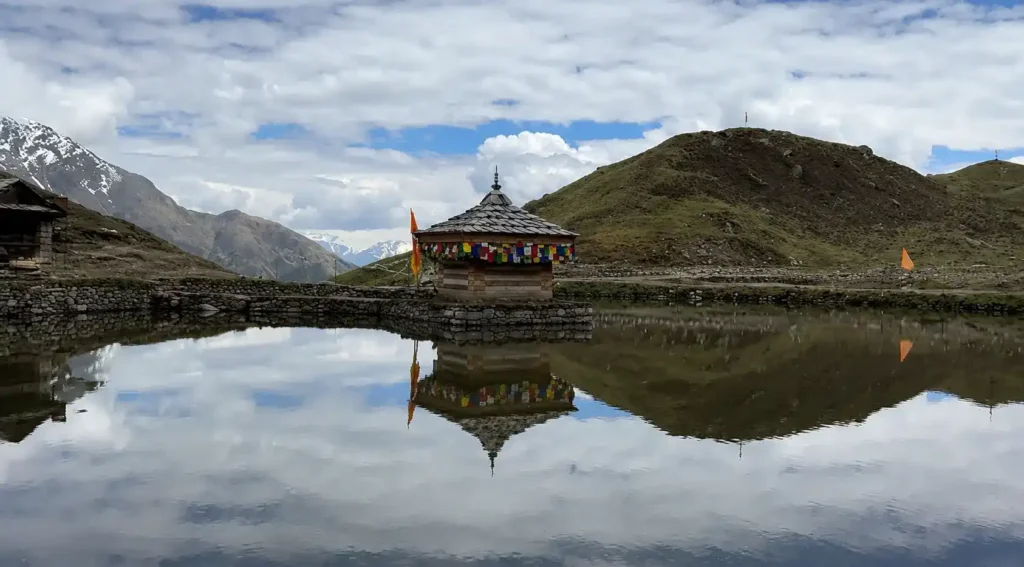
The final section takes you towards Yulla Kanda Lake and the Krishna Temple. After walking through the open mountain landscape and crossing streams and rocky sections, the temple and lake are visible.
The setting is one of the highlights of the trek. The temple stands surrounded by water, with the Himalayan mountains forming the backdrop.
The experience is very different from a regular sightseeing spot. It is a remote religious site reached after a long and tiring trek, so reaching the temple feels like the reward for completing the tiring trek.
How Difficult Is the Kinnaur’s Yulla Kanda Trek?
Yulla Kanda is a moderate to difficult trek and can be difficult for beginners. The initial village section is manageable, but as you move towards the temple, it gets tougher.
The main reasons are the long distance, continuous uphill, and steep sections.
Rain, hail, fog, and sudden weather changes can also affect the trail conditions. It can make the trail slippery and much harder.
Facilities are limited along the trekking route, and the mobile network is weaker, while some junctions can be confusing. A local guide is therefore useful, particularly for first-time trekkers or when trekking in snow.
Best Time to Visit Yulla Kanda
Yulla Kanda can be visited throughout the year, but different months offer different trekking experience.
- Consider March to June for pleasant weather, green landscapes, clear skies, and mountain views.
- You can see lush scenery between July and September, but rain can make the trek difficult.
- Snowfall between October and February makes the upper trail difficult or inaccessible.
If you are a Lord Krishna Devotee, Janmashtami is a special time to visit and experience the celebrations at the sacred Krishna Temple
Yulla Kanda Trek Itinerary
Day 1: Reach Yulla Khas
Reach Yulla a day before and stay in a local homestay. Rest at night and prepare for the trek.
Day 2: Yulla Village to Base Camp
Start the trek from Kinnaur’s Yulla Village, passing through the village area, stairs, mountains, forest sections, and open terrain before reaching the base camp.
Depending on your pace and trail conditions, this can be tiring. Stay overnight at the base camp if needed.
Day 3: Base Camp to Yulla Kanda and Return
Start early for the final section to Yulla Kanda. The last part can be difficult if there is snow. After visiting the temple, return to the base camp.
From there, continue back towards Yulla Village according to your trek plan.
Where to Stay?
- Yulla Khas/Yulla Village: This is the most convenient option and has several local homestays. Many homestays are available with basic rooms and food facilities. Staying here makes it easier to start the trek early.
- Urni: You can also stay in Urni, which is around 2-3 km below Yulla, the starting point of Yulla Kanda.
- Tapri: You can stay here overnight if your travel schedule requires it, but Yulla is closer and is the most convenient option to start an early trek.
Yulla Kanda Temprature

- Temperature
- Precipitation
- Rain Chance
- Wind
- Humidity
- Pressure

Things to Know Before the Yulla Kanda Trek
Before starting the trek, keep these points in mind:
- The trek is not a short temple walk. Be prepared for a long mountain trek.
- Snow can make the trek difficult.
- Carry water with you. Refill whenever you find a reliable water source.
- Don’t rely only on the online map. Trail conditions can change, so ask locals or your guide about the current route.
- Once you leave the village, don’t expect regular shops or hotels.
- Keep an extra pair of socks. Wet feet can become a real problem in the snow.
- Start early, as the final section can take longer than expected, particularly in snow.
- Yulla Kanda is a religious place, so follow local customs around the temple.
- Don’t litter or throw garbage. Carry your waste back with you.
- Check conditions before travelling. Weather, road conditions, and snow levels can change quickly in the mountains.
Frequently Asked Questions
What is the distance of Yulla Kanda Trek, Kinnaur?
The trek from Yulla Khas is around 12 km, but the exact distance can vary depending on the starting point and route. The base camp area is around 8-9 km, and the remaining 2-3 km is to reach the temple
How difficult is the Yulla Kanda Trek?
Yulla Kanda trek is tough for beginners. Long distance, high altitude, steep climb, and snow can make the trek difficult for the first-timers
Can beginners do the Yulla Kanda Trek?
A fit beginner may be able to do the trek in favourable conditions with proper preparation and a guide. Heavy snow can make it considerably more difficult and is not ideal for a first Himalayan trek.
Is a guide required for Krishna Temple Yulla Kanda Trek?
Yes. A guide is recommended, especially during the snowfall. They can help you in poor weather conditions, avoid wrong routes, and with other issues.